


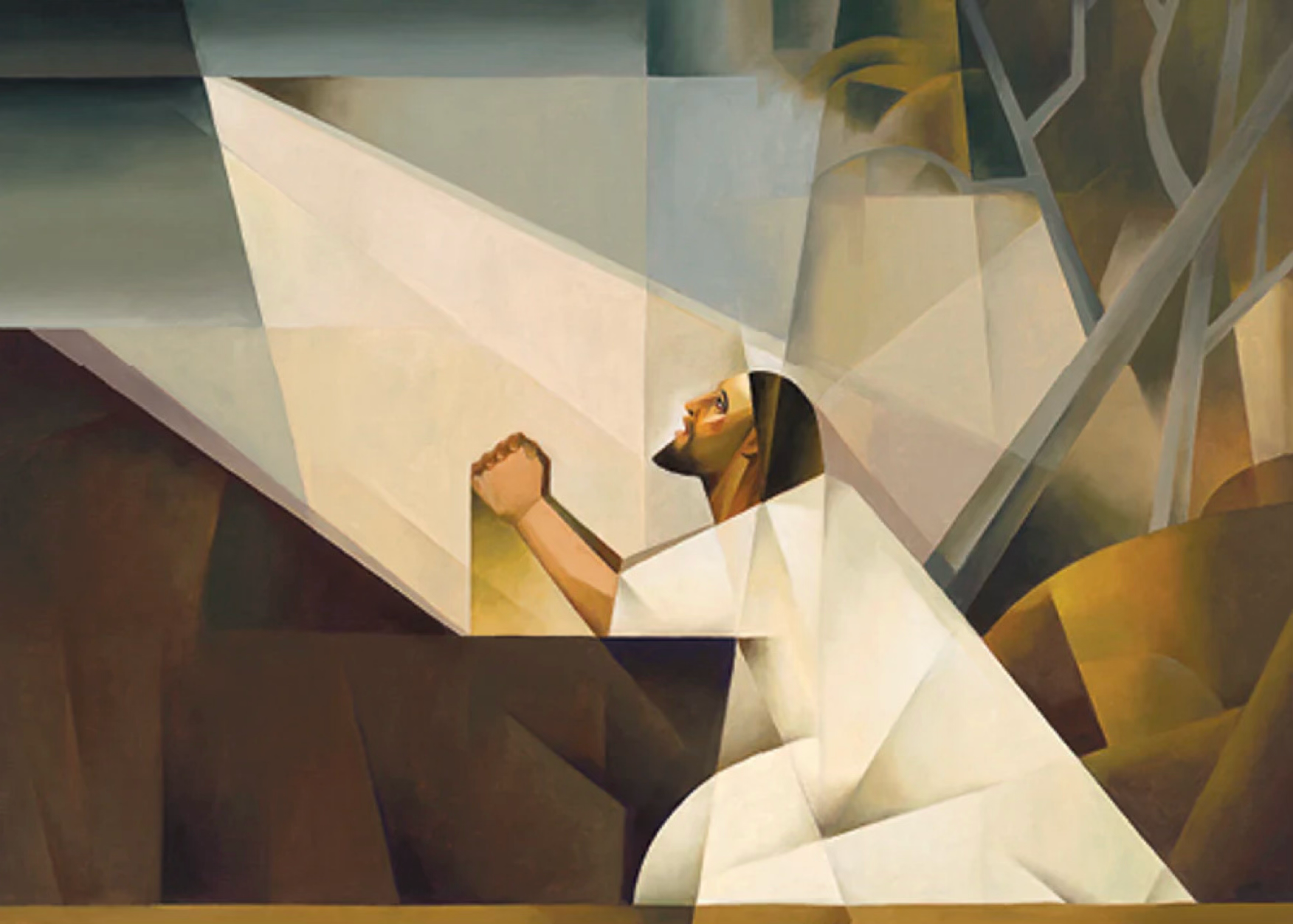
If you ask a Latter-day Saint (or “Mormon”) where the decisive act of redemption occurred, many will point not to the cross but to the Garden of Gethsemane. And that isn’t anecdotal. A Brigham Young University study asked students where “the Atonement of Christ mostly took place.” Eighty-eight percent answered, “In the Garden of Gethsemane.” Only twelve percent chose “On the Cross at Calvary.”1
I think those numbers reveal one of the most distinctive features of modern LDS soteriology. The garden carries an enormous theological weight that, for many, defines where Christ bore human sin. Yet, interestingly, this emphasis isn’t native to early Mormon thought, nor does it stand in easy relation to the scriptural foundations of Christian atonement—whether biblical or LDS—so recent efforts among Latter-day Saints to recover the cross stand out as a notable and welcome development.
This was the topic of a presentation I delivered in Boston at the Evangelical Theological Society annual meeting last week, titled Horticentric Atonement in Mormon Soteriology: Its Rise, Theological Tensions, and Reorientation.
Here’s the Reader’s Digest version.
The Seeds of Horticentric Atonement
First, a term you may not know: horticentrism. I use it to describe a garden-centered view of Christ’s atonement, from the Latin hortus, meaning garden, and set over against crucicentrism, a cross-centered view.
I define horticentrism as the Latter-day Saint pattern of locating Christ’s decisive, sin-bearing work primarily in the Garden of Gethsemane rather than in His death on the cross.
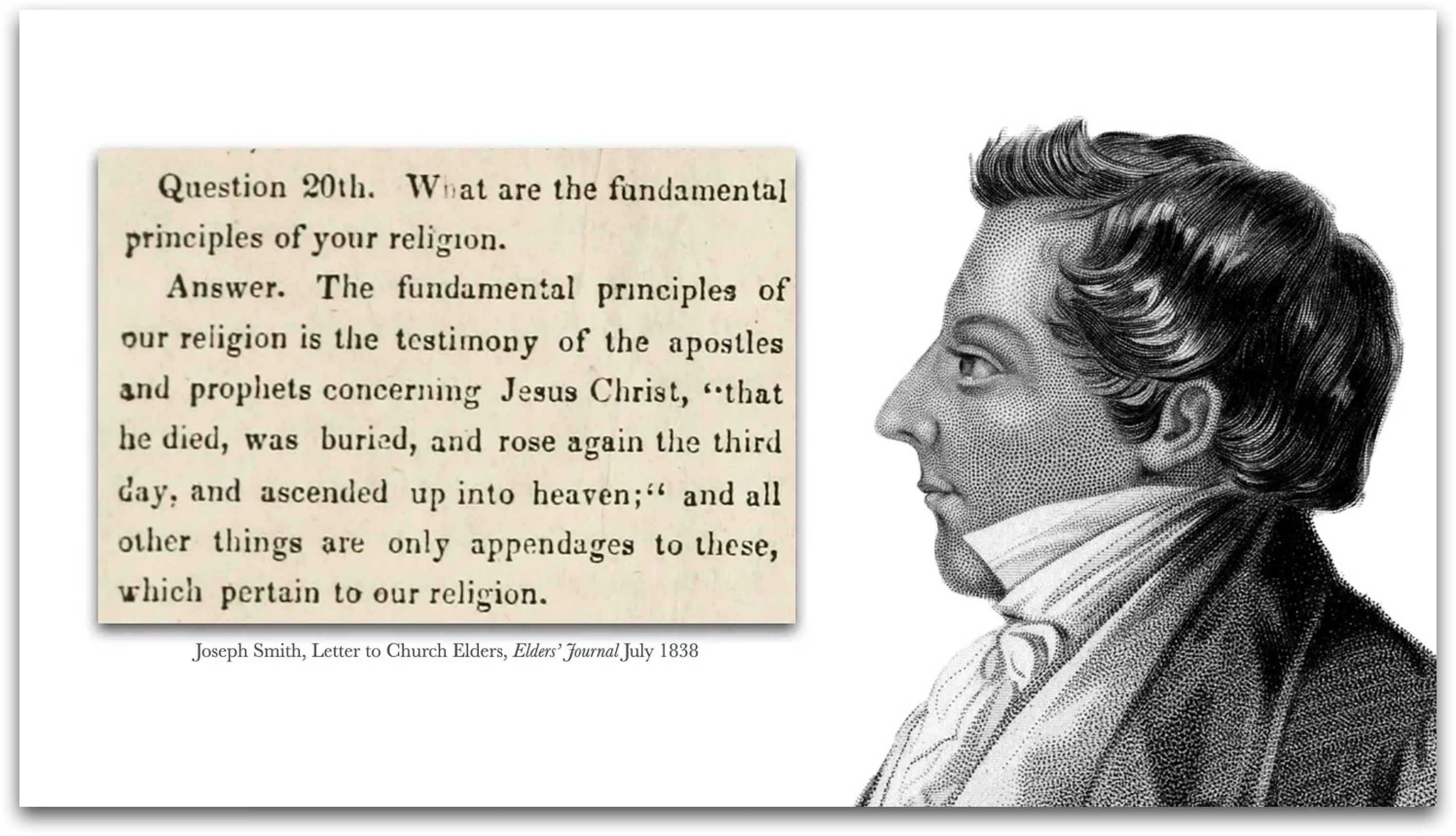
To see how that emphasis arose, we need to start at the beginning of the Mormon story. The earliest LDS scriptures and sermons resembled broader nineteenth-century Protestant crucicentrism. The 1830 Articles and Covenants (now Doctrine and Covenants 20) confess that Christ “was crucified, died, and rose again the third day.” Joseph Smith exhorted his followers to “preach Christ, and Him crucified” (cf. 1 Corinthians 2:2). In fact, he referred to Gethsemane in connection with atonement only once, as far as I can find, and that connection remains fairly weak.
But other texts within the LDS scriptural tradition created room for a garden-oriented reading. Mosiah 3:7 describes Christ’s suffering in language that resembles Luke’s Gospel: “blood cometh from every pore, so great shall be his anguish.” Doctrine and Covenants 19:18 intensifies the imagery, quoting Christ as saying that He began “to tremble because of pain, and to bleed at every pore.” These passages don’t articulate a full horticentric theology, but they supply raw material that later Latter-day Saints would elevate into a theological centerpiece.
Both of these unique LDS verses intuitively resemble Luke 22:44, in which Christ is described as being in such agony that “his sweat became like great drops of blood falling down to the ground.”
While Joseph couldn’t have known at the time that the earliest and more reliable manuscripts don’t include this verse, he was likely aware of the debate over whether the blood was literal (hematidrosis) or metaphorical.2 Commentators like Adam Clarke—whom Joseph consulted—sided with a figurative reading because the key Greek phrase for “like” (hōsei) marks comparison, not composition. Luke’s Gospel used it the same way elsewhere, describing likeness rather than identity (see 3:23; 9:14).
Joseph, though, preserved the verse as it stood in his New Testament revision and apparently favored a literal interpretation. Whether he understood the textual issues behind it or simply followed the KJV’s rendering, the result was the same: the reading became scripturally authoritative in the LDS tradition, even though early LDS teachings continued to center Calvary.
That balance shifted gradually. Brigham Young, in 1856, suggested the garden’s suffering surpassed the cross because “the Father withdrew Himself . . . and cast a vail over him.”3 John Taylor, in 1892, described Gethsemane as the moment when Christ first bore “the burden of the sins of all men.”4
Still, these leaders treated the garden and the cross as sequential scenes, not rivals. Gethsemane marked the beginning of Christ’s burden as Calvary remained essential.
The Twentieth-Century Turn
A decisive shift came in the early twentieth century. In 1915, James E. Talmage published Jesus the Christ, giving enduring shape to modern LDS atonement theology. He wrote that Christ’s agony in Gethsemane “caused Him to suffer such torture as to produce an extrusion of blood from every pore,” and that in the garden Christ “took upon Himself the burden of the sins of mankind.”5 Talmage didn’t deny the significance of the Crucifixion, but his framing placed Gethsemane at the center of the redemptive act.
This development coincided with a period of institutional redefinition. After the 1890 Manifesto ended polygamy, the Church began integrating into American civic life while emphasizing distinctive theological marks. The horticentric emphasis served that dual function. It helped the Church integrate by centering redemption in Christ in ways recognizable to Christian neighbors, and it reinforced uniqueness by locating Christ’s decisive suffering in Gethsemane rather than on the hill—an interpretation that distinguished the community while preserving its confession of Christ as the sole source of salvation.
By mid-century, the garden had become the dominant venue in LDS preaching. In 1947, President Joseph Fielding Smith taught that Christ’s greatest suffering was not on the cross at all, but in Gethsemane, where “he carried on his back the burden of the sins of the whole world.”6 And in 1985, Bruce R. McConkie delivered the clearest articulation of the mature horticentric model. He declared that Gethsemane was where the “Sinless Son of the Everlasting Father took upon himself the sins of all men.”7 Calvary, in his view, completed the sacrifice, but the redemptive work began in the garden.
This cultural shift gradually reached every corner of LDS devotional life. Art, manuals, curriculum, and hymnody consistently foregrounded Gethsemane. Depictions of the Crucifixion grew sparse—some saying the image feels “too graphic or painful to look at”—and the garden became the imaginative home of the atonement for most Latter-day Saints.8
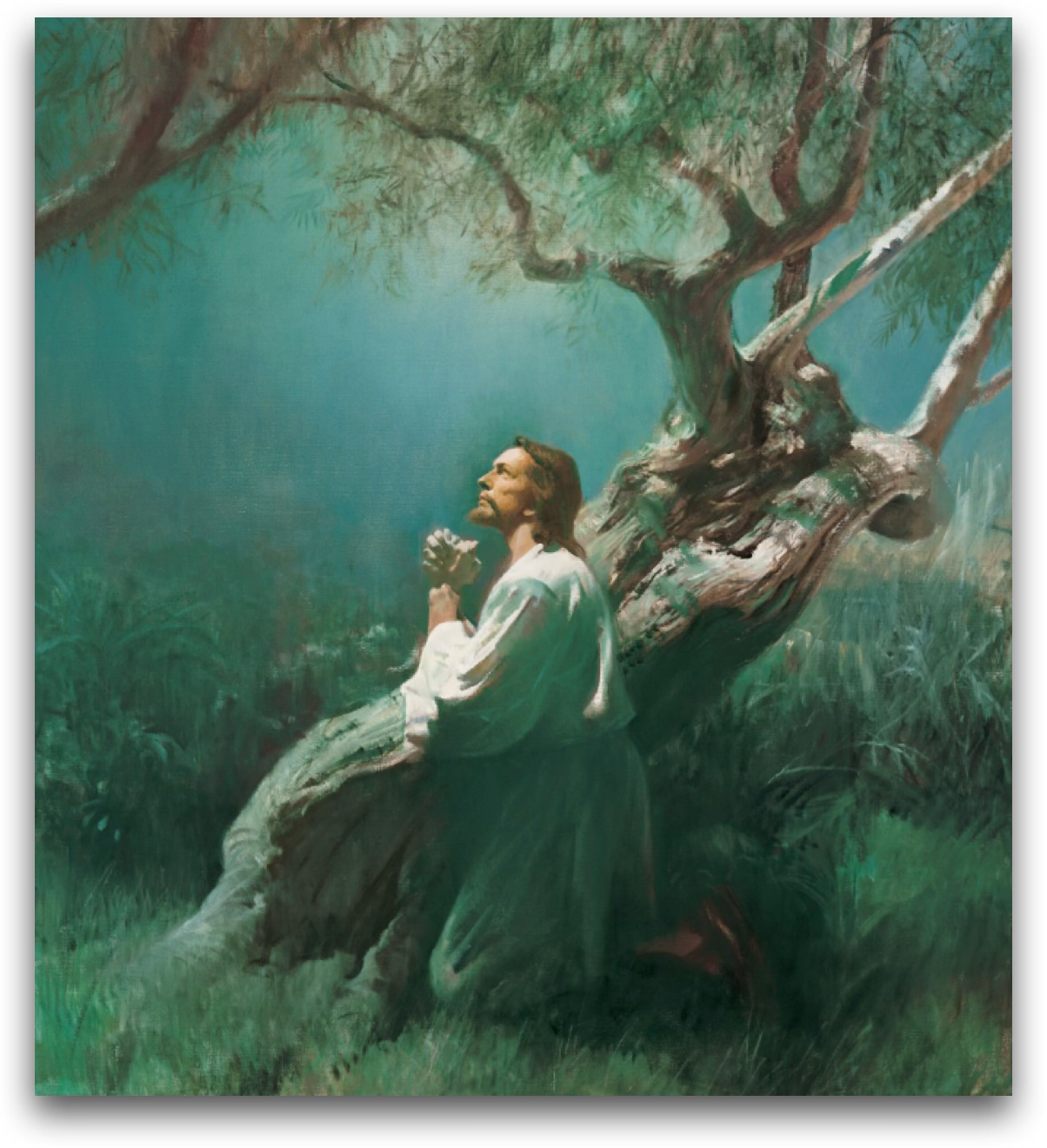
For example, Melanie M. Hoffman’s 2007 hymn “Gethsemane” captures this well.
     “The hardest thing that ever was done,
          the greatest pain that ever was known,
               the biggest battle that ever was won!
Gethsemane!
     Jesus loves me,
          so he gave this gift to me in Gethsemane.”
Hoffman’s hymn reflects the sensibility that shaped late-twentieth-century LDS piety, that Gethsemane as the decisive arena where Christ’s suffering reached its fullest measure. For many Latter-day Saints raised on these images and songs, the garden was not simply part of the Passion—it was the Passion’s center.
Evangelical Reflection on Horticentrism
From an evangelical perspective, this emphasis creates several theological tensions, especially when measured against the scriptural logic of atonement.
To begin, LDS theology often uses the word “atonement” to encompass the entire sweep of Christ’s mission, i.e., premortal, mortal, and post-resurrection. LDS theologian Grant Underwood notes how contemporary LDS uses of the term “broadly refer[s] to all aspects of Christ’s redemptive work,” not only His sacrificial death.9 This holistic framing explains why Gethsemane plays such a prominent role. It becomes one decisive moment among many, each tied to Christ’s obedience.
Another dynamic helps explain why Gethsemane rises to the surface of LDS devotion. Mormonism’s worldview turns on agency, i.e., the moral freedom that structures the entire Plan of Salvation. In that plan, every human spirit exercised its agency in a premortal council, and Christ voluntarily accepted the role of Savior. Salvation is, therefore, not merely received but pre-chosen. Within that framework, Gethsemane becomes the moment in which Christ’s agency reaches its fullest expression. As Douglas Davies observes, it is the scene where Christ is “proactive in atonement,” enacting the choice He made in the heavenly council long before His mortal life. Latter-day Saints read the garden as the place where He willingly enters a “mystical atonement,” suffering “in both body and spirit” (see Doctrine and Covenants 19:18).10
In this sense, Gethsemane becomes a distinctly LDS expression of the Christus Exemplar motif. Christ not only fulfills His premortal covenant with the Father but also models how human beings, who once affirmed the same plan, are to use their agency: to submit, to obey, and to remain faithful even under the weight of suffering. The garden becomes both the proof of His fidelity and the pattern for theirs.
Evangelical theology distinguishes Christ’s obedient life from His atoning death. Atonement for us is, generally, the once-for-all event in which the obedient Son offered His sacrificial death on the cross, which expiates sin (i.e., wipes away or removes the offense itself) and propitiates God’s wrath (i.e, turns aside the righteous displeasure of the offended moral agent), thereby securing reconciliation between God and sinners. So, the redemptive act itself is singular, rooted in the giving of His life. Suffering prepares that act; obedience expresses it; death accomplishes it.
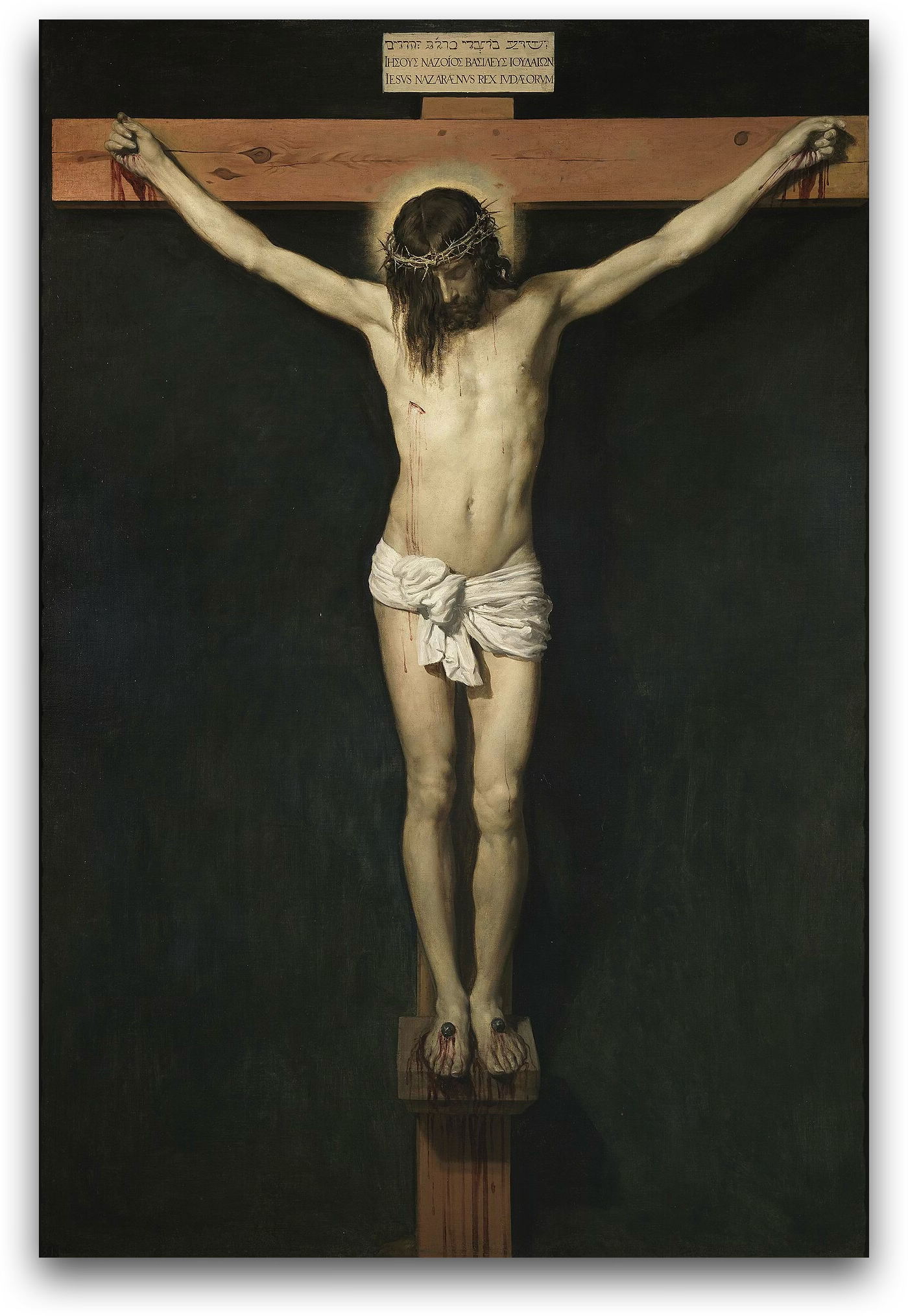
This is because the Old Testament system that Christ fulfills requires death for atonement. Leviticus 17:11 states that “the life of the flesh is in the blood,” and that “it is the blood that makes atonement by the life.” Bloodshed apart from death doesn’t expiate. Indeed, according to the New Testament, absent death, suffering cannot expiate; and what does not expiate cannot propitiate. Hebrews 9:22 reiterates the point that without the shedding of blood to death (i.e., in the context of sacrifice), “there is no forgiveness of sins.” Redemption comes through the “sacrifice of himself” (Hebrews 9:26). Paul affirms that “we were reconciled to God by the death of His Son” (Romans 5), and summarizes the gospel as simply “Christ died for our sins” (1 Corinthians 15:3). The epistle to the Hebrews centers the atonement in the “offering of the body of Jesus Christ once for all” (10:10). The focus remains consistent: salvation flows from the cross.
Absent death, suffering cannot expiate; and what does not expiate cannot propitiate.
Christ Himself pointed toward His death. In John 3:14, He likened His lifting-up to the serpent raised in the wilderness. In Mark 10:45, He spoke of giving His life “as a ransom for many.” His agony in the garden revealed the weight of what He would face, but His death on Golgotha accomplished what Gethsemane prepared. John Calvin captured the distinction well. Christ endured “a fiercer and more arduous struggle than with ordinary death,” yet the struggle anticipated (and actualized) the act that would purge sin.11 In short, the garden disclosed Christ obedience, but the cross executed it.
So, the question isn’t whether Gethsemane matters. It does, of course, but what does it mean? And what is its relation to the cross?
A Slow Reorientation Toward Calvary
In recent years, some Latter-day Saint scholars have encouraged a renewed emphasis on Calvary that complements, rather than replaces, Gethsemane. John Hilton III’s work is especially important.12 By surveying scripture, sermons, curriculum, and art, he shows that the tradition’s earliest sources—both LDS and biblical—lean heavily toward the cross. The horticentric turn arose much later, shaped by cultural, institutional, and theological forces unique to the twentieth century.
Hilton’s work invites Latter-day Saints to recover something earlier generations within their own tradition emphasized—Christ crucified. Not in place of the garden, but alongside it.
This shift appears in LDS hymnody as well. Devan Jensen’s “Long Ago, Within a Garden” (2018) sings of Christ “praying in Gethsemane” and “crucified on Calvary,” uniting both scenes in a single redemptive arc.
Even LDS poetry is taking up the theme. A recent example by Theric Jepson anchors salvation in Christ’s body, his hands.13 (I love this poem, by the way.)
   “The black hole
     of god’s salvation
     is here
                    in his palm
     where else
                         really
                              could It be”
Amen! Where else, indeed!
Alongside these scholarly and artistic developments, I’ve noticed a similar movement in lived religion. After more than a decade of leading interfaith dialogue with evangelical students in Utah, I now meet more and more Latter-day Saint Gen Z wearing cross necklaces. Sure, it’s quiet, uncoordinated, and personal, but it signals (to me at least) an expanding comfort with the symbol that earlier generations avoided.
In sum, I don’t think these developments erase the garden; rather, they give it its proper place. Gethsemane reveals the depth of Christ’s obedience, of course, but Golgotha reveals the cost. One shows the resolve and the other, the ransom (see Mark 10:45).
What Latter-day Saints and Evangelicals Can Learn From Each Other
To be perfectly clear, my aim here isn’t polemical. Latter-day Saints aren’t wrong to revere Gethsemane. They’ve inherited a long theological tradition that elevated the garden for reasons bound to their own history. But in doing so, some modern LDS voices turned the volume so high that Calvary faded from the soundscape, even though their scriptures call them to the cross again and again.
I think evangelicals could learn from this history. Our crucicentrism can sometimes eclipse the profound significance of Christ’s struggle in Gethsemane, e.g., His submission, anguish, and fidelity under the weight of accomplishing atonement. It’s not that we don’t see it, but like our de facto low Mariology when compared to Roman Catholicism, have we inadvertently quieted its place in our devotion? Latter-day Saints have preserved that reverence with real devotion. There’s something there, and we’d do well to see it.

But the center remains where the Gospels place it, i.e., the atonement was accomplished in Christ’s death on Calvary. The garden and the hill stand together when the story is read in its fullness, but they are not equal in role. The obedience of Gethsemane moves toward its goal while the sacrifice of Golgotha secures redemption. After all, the cross—not the garden—is where Christ declared “It is finished,” and that’s the only place where Christian hope begins.
This is why the growing Latter-day Saint recovery of the cross is so encouraging. It isn’t a departure from their tradition but a return to earlier lines in their own history where the crucifixion carried far greater prominence. And evangelicals who give fuller attention to Gethsemane gain a richer sense of the costly obedience that led Christ to that death. Each community notices something the other has tended to overlook.
Brought into conversation, those strengths sharpen the view that the Son who submitted in the garden is also the Son who suffered for sinners, the Son who died on the cross, and the Son who rose in triumph.


📘 Coming February 2026: 40 Questions About Mormonism
If you’ve appreciated this essay, you’ll love my forthcoming book, 40 Questions About Mormonism (Kregel Academic). It’s written for traditional Christians who want clear, charitable, and biblically faithful answers to the most common questions about the Latter-day Saint faith and tradition.
John Hilton III, “Teaching the Scriptural Emphasis on the Crucifixion,” Religious Educator 20, no. 3 (2019): 133–53.
A friend pointed out Lincoln Blumell’s work on this verse after the fact, but I haven’t had the time to process his argument. I thought I’d add it for reference, though. https://scholarsarchive.byu.edu/facpub/3452/
Richard S. Van Wagoner, ed., The Complete Discourses of Brigham Young (Salt Lake City: Signature Books, 2009) 2:1046–45.
John Taylor, An Examination Into and An Elucidation of the Great Principle of the Mediation and Atonement of Our Lord and Savior Jesus Christ (Salt Lake City: Deseret, 1892), 150.
James E. Talmage, Jesus the Christ (Salt Lake City: Deseret News, 1915), 613.
Joseph Fielding Smith, Conference Report, April 1947, 59.
Bruce R. McConkie, “The Purifying Power of Gethsemane,” https://www.churchofjesuschrist.org/study/general-conference/1985/04/the-purifying-power-of-gethsemane?lang=eng.
John Hilton III, Anthony Sweat, and Josh Stratford, “Latter-day Saints and Images of Christ’s Crucifixion,” BYU Studies 60, no. 2 (2021), 55.
Grant Underwood, Latter-day Saint Theology Among Christian Theologies (Grand Rapids: Eerdmans, 2025), 172. Emphasis added.
Douglas J. Davies, “Gethsemane and Calvary in LDS Soteriology,” Dialogue: A Journal of Mormon Thought 34, no. 3, 21.
Inst. 2.16.12
I cannot recommend John’s work highly enough for observers, both LDS and non-LDS alike, who are interested in LDS atonement.
“(atonement poem),” Theric Jepson, Dialogue: A Journal of Mormon Thought 58, no. 3 (2025).
I have struggled to understand the Savior's sacrifice. I view it now as a PROCESS and not one event or another. The opening act of the atoning process started in Gethsemane and then CONTINUED in the long night that followed where He went like a lamb to the slaughter as he faced the interrogation and abuse of the Jews. He answered them nothing. The culminating act of the process was the cross on Golgotha. It was essential that He give up His life and to yield up mortality voluntarily as a willing sacrifice for us. I am inclined to think that there were different parts of the suffering that He had to go through to make the sacrifice utterly complete. However, whatever He had suffered up to the cross would have meant nothing unless He completed the process fully and finally. We are gratedul for the cross and all that it represents. BTW, I am a member of the Church of Jesus Christ of Latter Day Saints and I am grateful for the cross and also Gethsemane. I am also grateful for the Empty Tomb.
I have seen some from Gen Z in the church also wearing crosses. It's an interesting piece of church culture and not doctrine and seems to stem from wanting to distinguish ourselves from catholicism or other christian groups as well as emphasize the living Christ. This article gives a nice overview and points out that some early LDS members wore crosses: https://www.ldsliving.com/what-church-leaders-and-church-history-teach-about-wearing-and-displaying-the-cross/s/10418. It was more a mid-20th century development to avoid cross imagery.
I also read the great apostasy chapter from your book. I like how you get to the crux of the issue, which, from what I read, sounds like protestants believe in an apostasy, but not an absolute one. Whereas LDS members would argue that there was a complete apostasy.
Part of the evidence used to support a partial apostasy is Matthew 16:18. However, LDS members would argue that eventually Christ will prevail over all evil and subdue everything under his feet so despite an apostasy, the end result is a victory. D&C 21:6 and D&C 17:8 both use the same language for Joseph Smith and Oliver Cowdrey respectively. However, Joseph Smith ended up being martyred for his beliefs. In this respect it could mean that God will accomplish his purposes through you. Another explanation could also be that since Peter was given the sealing power, that death will not prevail.
Additionally, would be curious to hear your thoughts on Amos 8:11-12. The LDS church interprets that as the Great Apostasy and the absence of continued revelation.
Finally, reading this book right now from a general authority named Tad R. Callister called, "The Blueprint of Christ's Church". It essentially seems like the LDS version of what you are doing with your book: https://www.amazon.com/Blueprint-Christs-Church-Tad-Callister/dp/1629720216
Have you read it? The table of contents is ordered by question in the same way that yours is as well, which I thought was a cool coincidence.
As always, thanks for the thoughtful article and insights!