


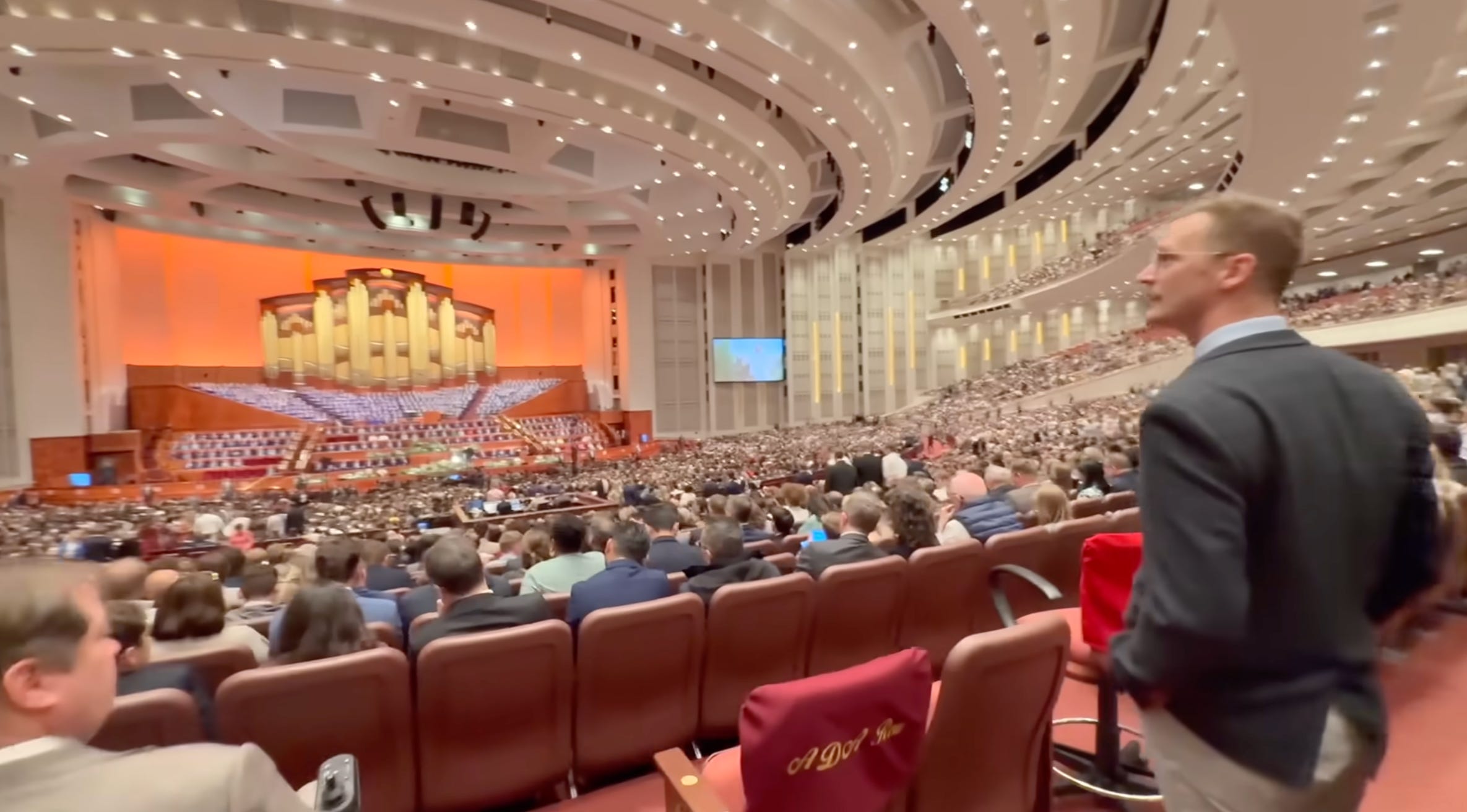
On April 4th, I attended the General Conference of the Church of Jesus Christ of Latter-day Saints for the very first time. For those unfamiliar, General Conference is a semi-annual gathering in which Latter-day Saint leaders—Seventies, Apostles, the First Presidency—address the entire LDS Church through a series of talks delivered in Salt Lake City and broadcast globally. This conference, in specific, was unique because it was Dallin H. Oaks’s first as the newly sustained president of the Church.
Part of the reason for my attendance was to document my experience. Jeff McCullough, of Hello Saints, captured it all here:
Here are my Top 3 takeaways.
1. The protesters were a lot more diverse than it appears.
The first thing I encountered were protesters. There weren’t as many as I anticipated, only a handful of small groups (2–3 people) with signs and tracts attempting to reach Latter-day Saints, whether to discuss the gospel, dissuade them from attending the conference, or simply condemn them to hell. Most of the protesters I met were some form of Protestant, mainly evangelical, but I met a Roman Catholic, which surprised me.
I didn’t anticipate was how diverse the protesters were. From the outside, they seem to be a homogenized group of people. Some protesters were there, in my opinion, for an honorable reason and doing things in a godly, respectful way. They were having genuine convictions about the LDS Church and its members that compel them to bear witness to the gospel, especially through calm, respectful conversation. Even though apologetics and street evangelism are not my cup of tea, I think as long as it’s done in gentleness and respect, there’s a genuineness that shouldn’t be dismissed.
There were, however, protesters I found to be off-putting. Most of them, in fact. There were a pair of men, in particular, callously hurling their judgment on Latter-day Saints—often before small children—and even managed to lump Jeff’s damnation in there as well. I can’t square this approach when Christians are commanded to “let your reasonableness be known to everyone” (Phil. 4:5) and to put on “compassionate hearts, kindness, humility, meekness, and patience” (Col. 3:12). I’ve never been convinced that yelling contentiously at people is fidelity to these commands. For what it’s worth, I stood behind a LDS family who’d gone through that gauntlet. A son was discussing the contentious men with his mother. She asked what he thought of them. “They seem angry and lost,” he replied.
Finally, there were a minority of protesters that, frankly, I think were processing spiritual trauma. They had deep resentment and anger toward the LDS Church, and they were there to vent and rage. It’s this last group, in particular, that I had a pastoral heartbreak over.
They won’t heal this way.
2. What are we saved from?
While listening to the talks—eight in total—I began to notice a theme. Each talk, in its own way, established and reaffirmed that we are saved exclusively through Christ’s atonement, i.e., there aren’t other Saviors, no other methods or ways, that do not lead through him. As Eduardo Ortega put it, quoting the Book of Mormon, we come to faith “relying wholly upon the merits of him who is mighty to save” (2 Nephi 31:19). The purpose of that salvation, as I heard it consistently framed, is covenant-making and covenant-keeping toward celestial glory. Brian Holmes put it plainly: “Covenant blessings flow from ongoing faithfulness, not merely from past participation.”
I’m compressing nuanced language here, but the pattern I kept encountering went something like: Because of Christ, if you exercise faith, repent, receive ordinances, make and keep covenants with God, and endure to the end, you will progress toward celestial glory.
And, while we were told may times that we are saved for celestial glory, I noticed a general absence of what we are saved from. Sin was mentioned—Wan-Liang Wu titled his talk after King Lamoni’s father’s prayer, “I will give away all my sins to know thee” (Alma 22:18), and Holmes referenced sin in passing—but the weight of the session fell on the destination of salvation more than its necessity. I didn’t hear much about enmity toward God, the moral guilt that makes atonement urgent, or the wrath from which Christ rescues us.
I want to be careful here because I only heard one session. I’m not characterizing the whole conference. But, from my perspective, I couldn’t help but to notice how evangelical Christianity tends to begin with the bad news—i.e., our sin brings us under condemnation and judgment, from which we need rescue—before the good news makes any sense. The salvation being proclaimed at General Conference felt oriented differently, less as rescue from condemnation and more as empowerment toward transformation.
3. Abiding in false vines.
Hands down, my favorite moment came from Ulisses Soares, speaking on John 15, the image of abiding in Christ as the true vine. I love this passage because branches don’t white-knuckle the vine, hoping to remain attached, banking on being good enough for the vine to accept and love and keep them. Branches are simply nourished by the vine and, in turn, bear fruit. And fruit is for the benefit of others, not necessarily the vine. Likewise, we don’t, by our own power, remain in Christ through sheer determination; rather, we receive it by faith alone in Christ alone, abiding in all God’s promises that come through him, and the fruit that results is for the edification of others, not him.
Now, Soares made an observation I hadn’t considered before. If Christ calls himself the true vine, the modifier implies the existence of false vines, just as “true Christ” implies “false christs.” So, in a world with many different voices and ideas and hopes and gods and idols, we’re constantly tempted to ‘graft’ ourselves to other sources of nourishment that actually don’t.
Excellent point. I was genuinely edified, and even convicted. What false vines have I been drawing from? What overlooked vice, what persistent distraction, have I been abiding in while telling myself it’s harmless?
Worth considering.

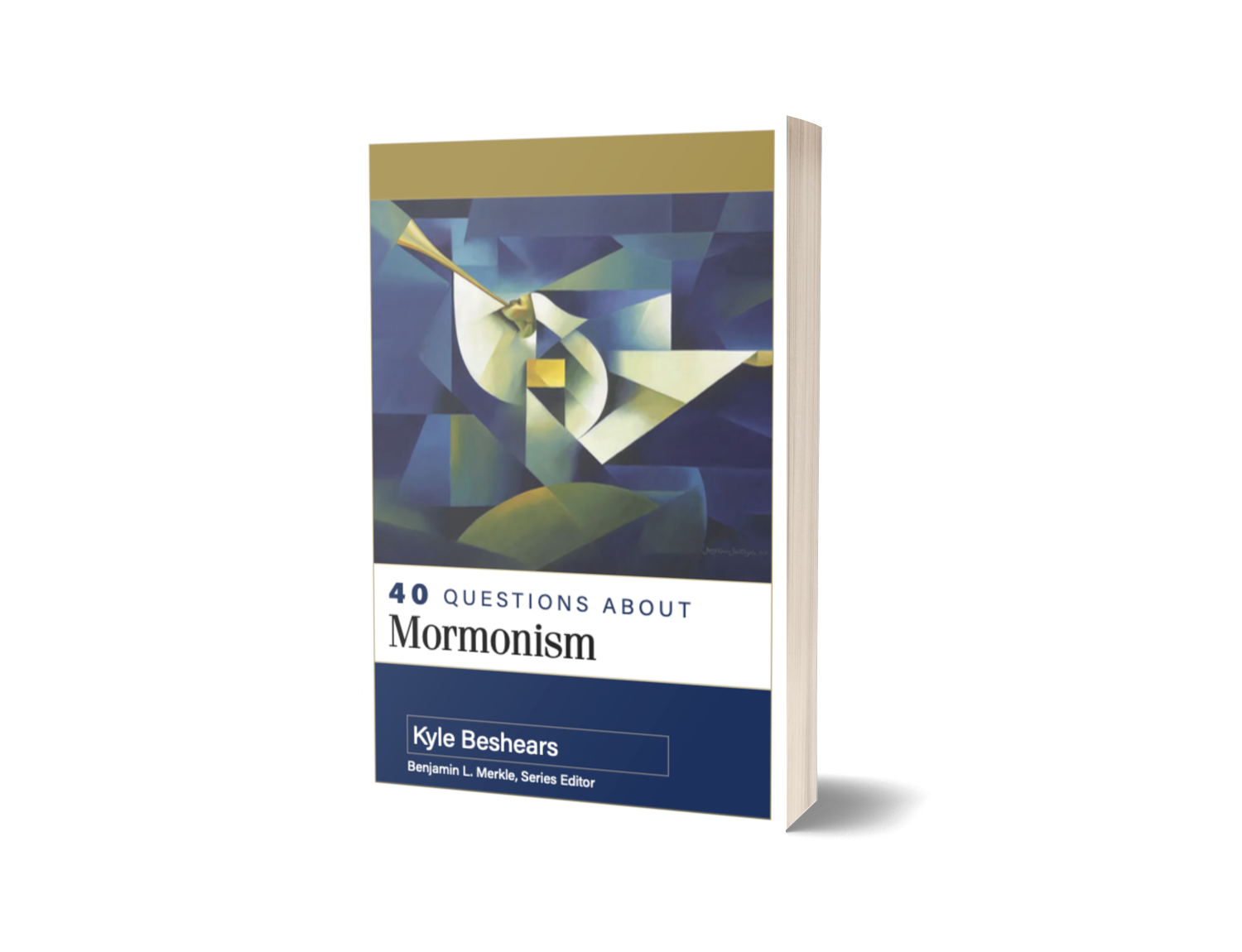
📘 40 Questions About Mormonism
If you’ve appreciated this essay, you’ll love my book, 40 Questions About Mormonism (Kregel Academic). It’s written for traditional Christians who want clear, charitable, and biblically faithful answers to the most common questions about the Latter-day Saint faith and tradition.
ORDER TODAY and download three free chapters to try it out.
Watched the YouTube video, loved the discussion. Interesting thoughts on the protestors, easy to paint them with a broad brush especially as a youth going to general conference and having a bunch of people yelling at you. Thanks for sharing your perspective!
Your observation of the inoffensive emphasis on salvation as destination over necessity because of sin matches my years of experience in the LDS Church. That with a narrowed ‘benign’ emphasis on God’s desire for our ‘happiness’ and success, without the devotional weight of divine justice, the way of the Cross, and utter detachment from worldly goods (including those deemed essential or most noble), was not an insignificant factor in my conversion out.