



“If anyone is inclined to be contentious, we have no such practice, nor do the churches of God” (1 Cor 11:16).
The word Paul uses for “contentious” is philoneikos, a lover of strife. If you squint, you’ll see the cousin of a word you already know but didn’t realize it: nikē, victory. That’s the name of the goddess Nike, after whom a certain sportswear company named itself, swoosh and all. It evokes winning, trophies, standing on the podium, your opponent defeated and demoralized, etc.
I don’t want to bury the lede: contention is idolatry because it’s a performance sacrificed to impress Nike.
I see a growing number of online apologists making that sacrifice. Evangelicals do it all the time, and it’s lamentably annoying to me. Sometimes I call it out, usually in private over a DM. On rare occasions, I’m slandered as a result, or blocked, and I have to watch from afar as people—well, let’s be real: middle-aged men—drag our shared faith through the mud to dunk on outsiders, thinking they’re pleasing God. My own tradition has plenty of friends of Nike, but that’s not what this essay is about.
I’m especially grieved to see it among Latter-day Saint apologists, because they have so much more to lose. They’ve inherited a birthright, i.e., nearly two centuries of goodwill, earned by Saints who endured mockery and violence and answered with gentleness and kindness. Some of their online defenders are squandering it to please Nike, not their Heavenly Father.
Who this is about
The average Latter-day Saint read this essay can relax, and so can every Latter-day Saint friend and colleague of mine. Nothing you’re about to read is aimed at you. Not a single of one you was on my mind when writing, even LDS apologists I’m friends with. I respect you a lot. You guys and gals know who you are, and I love you! I’d take your company over most people’s any day of the week.
My concern here is some in your Church’s unofficial, unsanctioned digital defense department, the chronically online ‘guardians’ of the LDS castle. I suspect you know who they are, too.
Just to be extra clear here, my experience with Latter-day Saints has been overwhelmingly positive. They’re gentle and warm, gracious, and humble. They’ve gone above and beyond to make me feel welcome and comfortable in their homes, their worship spaces, their classrooms. Some have even offered me coffee; to me, a Gentile, they became as Gentiles.
I’ve shared deeply spiritual experiences with Latter-day Saints. It’s hard not to when you’re reading the Gospels in the Garden of Gethsemane with forty of them. Latter-day Saints listen to me with real empathy, encouraged me through family issues, and made sacrifices for me to make me feel included.
In my experience, they’ve treated me in a way I can only call Christlike. I can’t hide that or shy away from it because it’s true, and it’s one of the things I most admire about them.
That’s exactly why the online apologetics world is so jarring. When I step away from a Latter-day Saint living room into a Latter-day Saint comment section, it feels like I’ve crossed into another country.
The religion of mild persuasion
You may know that I’m currently finishing a book, tentatively titled Mapping Early Mormonism. It’s why I’ve been less active on Substack because I’m trying to get the book across the finish line.
Anyway, back in September, I finished one of the hardest chapters I’ve written on Latter-day Saint history. The Missouri period is difficult to look at, let alone write about.
I found a story in that time period, though, that I love.
In December 1838, Joseph Smith was locked in the lower room of the jail at Liberty, Missouri. Fourteen feet square, a six-foot ceiling, half sunk below ground. He was there through the winter.
(That’s not what I love, you weirdo. Just keep reading.)
While he sat there, his people were exiled from the state. Governor Lilburn Boggs had ordered that the Mormons be exterminated or driven from Missouri, and so they went, across the Mississippi into Illinois. Three days after that order, a militia rode up on a settlement at Shoal Creek and opened fire. Seventeen died at Haun’s Mill. An excerpt from the book:
The killing included children. When nine-year-old Charles Merrick ran for his life, he was shot and killed. Ten-year-old Sardis Smith—Amanda’s son—didn’t run. Instead, he hid beneath the blacksmith’s bellows, and begged for his life. The mob had already killed his father, Warren Smith (no relation to Joseph), and wounded his brother. “Kill him,” one of the men shouted, “he is the son of a damned Mormon.” A raider leveled his gun and blew off a portion of the boy’s head as he “fell dead by the side of his father.” When some of the vigilantes objected, another retorted, “Damn the difference! Nits make lice!” It was the same sort of thing White Americans said to justify killing Native children. The mob dispersed in song. “God d—n God, God d—n Jesus Christ,” they sung. “God d—n, the God d—n Mormons! we have sent them to hell.”
That was October 30, 1838. Today, as I publish this, marks 188 years.
Like I said, one of the hardest chapters I’ve written.
The story continues. Joseph escaped custody in April, and by winter he was in Washington, pleading with the federal government to make Missouri answer for what the Saints had experienced. He got an audience with President Van Buren, but was told that, though the Mormons’ cause was just, nevertheless nothing could be done for them. Van Buren couldn’t afford to lose Missouri support. Joseph stayed in the city anyway, working the Capitol and waiting.
That’s the man Matthew Davis went to hear preach.
Davis expected a fanatic. If anyone had earned the right to rage, it was Joseph Smith. Instead, Davis wrote to his wife, Mary, “There was no violence, no fury, no denunciation.” What he found looked to him “to be the religion of meekness, lowliness, and mild persuasion.”
“Throughout his whole address,” Davis observed, Joseph “displayed, strongly, a spirit of Charity and Forbearance.” In other words, he assumed the best about people who disagreed with him, and he declined to answer his critics in kind. He did this with the wounds of Missouri still fresh.
“Are. You. Kidding. Me.” were the words that floated through my head. After everything the Saints’ have been through and were going through, Joseph held it together long enough to present to the world calmness and meekness and mild persuasion.
That same year, Joseph wrote to his apostles: “Love is one of the leading characteristics of Deity, and ought to be manifested by those who aspire to be the Sons of God. A man filled with the love of God, is not content with blessing his family alone, but ranges through the world, anxious to bless the whole of the human family.”
That’s the inheritance I mentioned at the start. For two centuries, Latter-day Saints have endured mockery, suspicion, outright violence, and, by far and away, they’ve answered with kindness.
That goodwill is the Latter-day Saint birthright.
Squandering the birthright
Over the past couple of years, I’ve watched some Latter-day Saint apologists trade that birthright for a quick win, the way Esau traded his for lentil soup.
Esau was starving, so he sold his birthright to his brother for a single bowl of stew. Just a single meal. Sure, it filled him for an afternoon, but it cost him everything that was meant to last him for generations. The hunger for victory works the same way.
It wants to be fed now, and online it doesn’t have to wait too long. You post the dunk, the algorithm likes it, and within minutes, so does everyone else. The dopamine hit is real. Then, you’re back at the castle gate for another night of standing watch, confident that you’ve done something good for your community. The sense of accomplishment, even of manhood, can feel overwhelming in the moment, but it’s fleeting and shallow, and it costs far more than it’s worth.
The cost is a heart bent toward juvenile dunking and sneering and chest-thumping and scalp-hunting for lolz and likes. Mocking the Trinity, the creeds, etc. Snide pedantry, drive-by postings, gotcha clips cut to make someone look foolish. Reading the worst motives into every honest question and declaring victory before the other person has finished speaking Dry, cutting comments on essays they never bothered to open, posted after reading the title alone. I’ve personally experienced all this, and it’s mild by comparison. A friend had a meme made of him in which it appears he’s endorsing Nazism, made by an apologist who ranks highly (I’m told) among the leaders in the digital space, the kind younger apologists look up to.
I won’t name names, but you’ve seen it, I’m sure. I know I’m not the only one who has.
I can already hear the reply: “They started it.” Sure, oftentimes, they did. Evangelicals have given Latter-day Saints plenty of reasons to hit back, so I’m not finger-wagging here. But “he hit me first” is so childish. It’s what my seven-year-old says to excuse her misbehavior. But Christ didn’t give us an exception for when the other side throws the first punch. He told us to turn the other cheek, to bless those who curse us, and to do unto others as we’d have done unto us, not as others have already done unto us.
If you can’t obey the ABCs of the gospel, what makes you think you can defend its more advanced elements?
This is why, personally, when it comes to some scholars who claim a Christian faith, I can’t take their work seriously when their online personality is so mismatched from the Lord they’re claiming. If they can’t be trusted to treat a stranger with kindness in a comment section, I’m not sure why I should trust them with the doctrine of God.
Anyway, social media isn’t real life, but it shapes real life.
In 2025, Joe Rogan called Mormons “the nicest cult members” with evangelical apologist Wesley Huff sitting right across from him. I know Latter-day Saints winced at that, because they heard “cult,” and cult means “threat,” and threat means something has to be done about it. But, hear me out: I heard nicest. That reputation didn’t come cheap. It took generations of ordinary Saints paiding for it, day and day, insult after insult, blow after blow.
Again, I understand why some apologists have turned aggressive. The opposition toward Latter-day Saints is real and often ugly. I’m sure many of these apologists believe they’re protecting their people. I take them to be sincere.
But sincerity doesn’t settle the question of whom you claim to serve. Again, Jesus said to do unto others as you’d have them do unto you. Paul told the Colossians to walk in wisdom toward outsiders, and to let their speech always be gracious, seasoned with salt. He told Timothy that the Lord’s servant must not be quarrelsome—not should not but must not, it’s non-negotiable. The servant must be kind to everyone, correcting his or her opponents with gentleness. Paul told the Thessalonians to live quietly so they’d win the respect of outsiders. And Joseph Smith, under far worse pressure than any online critic can muster, practiced mild persuasion.
Look, fighting fire with fire just makes the fire larger, more destructive.
It pleases only one god: Nike.
The generational concern
Indeed, I’ve come to the opinion that these apologists believe they’re worshiping God and defending their Church. But they aren’t, not really. They’re kneeling at the feet of Nike.
And Nike has her own liturgy. If you want to please the goddess of victory, you have to win. And, if you have to win, you’ll do whatever it takes. You’ll clip the video to make your opponent look foolish. You’ll mock what she holds sacred. You’ll declare victory before he’s finished speaking. Every clever takedown and viral dunk is another offering laid on her altar.
But Nike is never satisfied, and she’ll always wants one more win.
Worse, it’s training a new generation of LDS digital defenders to go even farther.
One of my life mottos is simple: what leaders do in moderation, followers do in excess.
If the leading apologists in a movement are aggressive and unkind, even in moderation, a crop of younger apologists will follow them. They’ll want to impress you, the veteran LDS apologist, but also Nike, too. And they’ll do more than what they saw their favorite apologists do.
I bet that crop is already here, we just don’t know it yet, because they’re at the MTC or on their mission or in college. There are Gen Alpha Latter-day Saints in the wings right now consuming this content, and for many of them it’s the primary way they see their faith defended. They’re being trained to defend their Church in a way that would have been foreign to it for most of its existence.
Matthew Davis wouldn’t recognize it.
I don’t think Joseph would either.
So, if you will, some advice
Evangelicals, us first.
Don’t stoke the fire. A lot of what Latter-day Saints are reacting to is the mockery and misrepresentation that’s we’ve lobbed at them for generations. Too many of us still do. (To be clear, I’ve written elsewhere about what constitutes evangelical anti-Mormonism, and why I think it’s a real problem in our tradition.) When you see it from one of our own, call it out, privately first, and then publicly if it keeps up. Our credibility depends on being willing to correct our own before we ask anyone else to correct theirs.
And when it comes your way, don’t hit back. Everything I’ve said to Latter-day Saint apologists applies to us, too, and if anything, we should know better, since we’ve been on the giving end far longer.
My practical advice: Don’t reply to anonymous accounts. If someone seems worth a conversation, reach out privately, and do it gently. And don’t be afraid of the block and mute buttons. They’re liberating. There are LDS apologists—and some evangelical, frankly—I’d forgotten existed until someone sent me something of theirs. I’d blocked or muted them long ago. The less oxygen you give these guys, the better.
In fact, sabbath from social media. Sometimes, I just completely ignore socials for a day or two. It’s liberating, great for mental health. I use Freedom, because I still need my laptop to work. Check it out.
To Latter-day Saints who are discouraged by what they see but still want a strong man at the gate, I get it. You want to feel safe, but the cost is too high. The strong man at the gate is the first person outsiders meet. He’s the face of your city. Behind him is everything beautiful about it, e.g., kindness, meekness, gentleness, respect. That’s the life Jesus modeled and Paul commissioned us to live. If the man at the gate is a brawler, few will ever see what’s inside, and that’s a shame.
You also don’t have to follow these guys. “Police your own” is probably too strong a word, but the best way for any religious community to improve its apologetics is from the inside because insiders pull their own people back and point them toward the community’s values.
Is the spirit of contention a value in your religious community? That’s a stupid question; I know it’s not. But that’s not what’s being communicated to outsiders online through some of your apologist.
Remember, apologists are de facto representatives of the Church of Jesus Christ of Latter-day Saints, whether you like it or not. It’s just reality. Yes, you might think your Church’s representatives are your General Authorities and the people who serve in official capacities. But to outsiders, they aren’t. Your average evangelical has no clue what a General Authority even is. They certainly don’t know General Conference exists, and even if they did, they wouldn’t tune in.
The people they do pay attention to, however, fall into three groups. First, your missionaries; second, the ordinary Latter-day Saints they meet at work, at school, and in their neighborhoods; and third, your digital apologists. The first two groups are great. They’re kind, patient, and empathetic.
It’s the third group that worries me.
“If anyone is inclined to be contentious, we have no such practice, nor do the churches of God” (1 Cor 11:16).
Don’t be friends of Nike. Be friends of the Lord Jesus, who said, “Blessed are the peacemakers.”

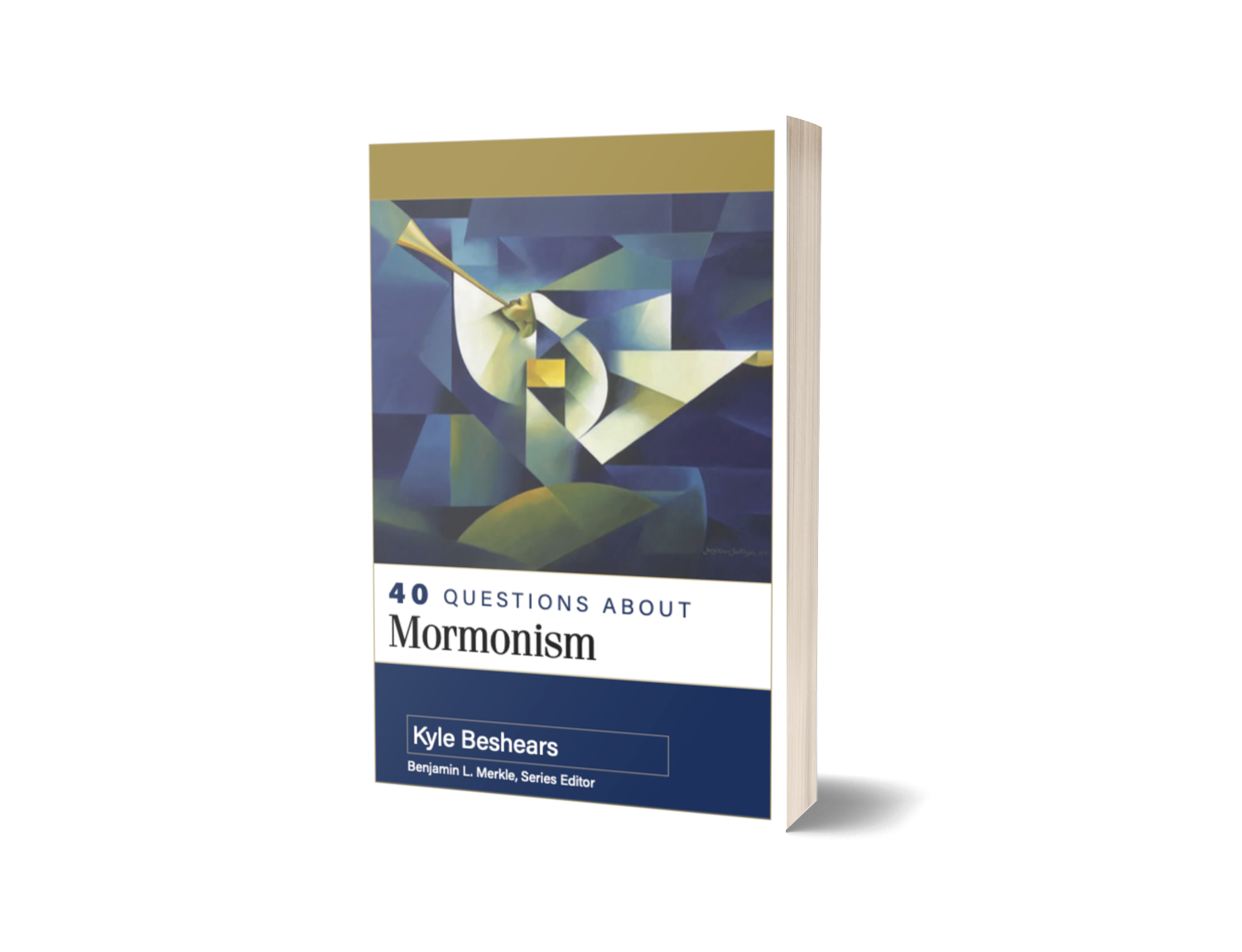
📘 40 Questions About Mormonism
If you’ve appreciated this essay, you’ll love 40 Questions About Mormonism (Kregel Academic). It’s written for traditional Christians who want clear, charitable, and biblically faithful answers to the most common questions about the Latter-day Saint faith and tradition.