


Note: The analysis contained in this essay represents the personal opinion and conjecture of the author. It is not presented as fact. All conclusions drawn are based solely on the author’s reading of publicly available texts and are offered as literary and textual criticism. The author makes no claim to have determined the origin or production method of any text discussed.
“A deceiver will wear kindness like clothing and carry peace like a weapon.”
– Record of Merunhi 2:48
I’ve been following a really interesting story in the Latter-day Saint world, but you’ve probably not heard of it. It surrounds the incredible claims of David Taylor, aka Mikgah Ogichidaa,1 or “Kind Warrior Man.”
I wasn’t all that interested in the story until I learned about the incredible claims he’s made. Over the past year and a half—I believe that’s the timeframe—Indigenous lodges spanning the American continents have been quietly releasing a flood of sacred records, which, Taylor says, corroborate (and in some cases predate) the Book of Mormon. What began as an expectation of a dozen or so texts exploded last fall when sixty records arrived at once. By December 2025, at least, the total had grown to thousands of pages.2
Okay, I thought to myself. You have my attention.
But, why are they all being released now?
Taylor was pretty blunt about it. The records are, in his words, “a last ditch effort to try to breathe air onto an ember that’s almost gone”—a kind of eschatological ultimatum addressed to traditional Christians, Jews, Latter-day Saints, and LDS restoration branches alike to “get your crap together and become one.”
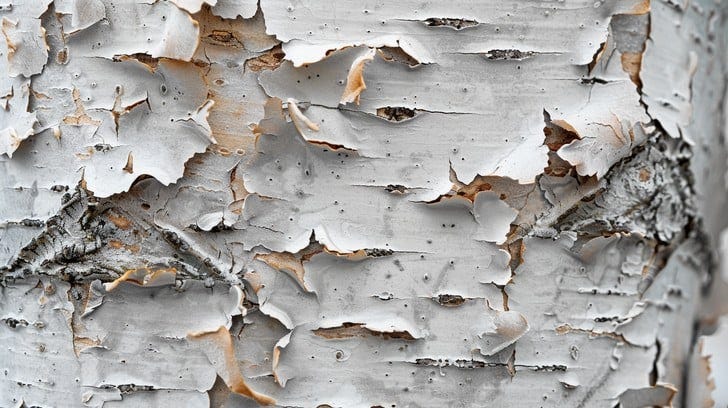
The records themselves, Taylor explains, are the surviving remnants of an ancient pan-American library system. These records were moved between various locations for centuries before being transcribed onto other media, like birch bark. The most dramatic of the lot is what Taylor calls the “Record of Merunhi,” which he identified with the Book of Mormon character, Moroni.
Best of all, these records are accessible—for $9.99 a month—through a mobile app called Sacred Records.
Naturally, I decided to read some.
As I perused my options, I was drawn toward two texts, in specific.
First, obviously, the “Record of Merunhi.” That’s fascinating to me because, in my area of specialty, a Mormon prophet named James Strang also produced ancient records in 1845, called the Voree Record, with a Moroni-like character, the Rajah Manchou of Vorito.
And, because I’m a preacher, the second text that caught my attention was the Sermon of Yehowzhowa. The name is what caught my attention because Yehowzhowa appears to be an indigenized rendering of the tetragrammaton, or divine name, e.g., YHWH, Yehovah, Jehovah.
Has Taylor really published previously unknown records from Moroni and a sermon from the incarnate God himself, delivered in the ancient Americas?
I had to see for myself.
click
It didn’t take long before I felt like something was off, like the text has a silicon texture to it. To be frank, after a couple of minutes, my thought was, “This must have been written by AI,” or at least heavily revised by AI. So, I lost interest in reading them altogether.
And I might have left it at that, except for one thing: the records are locked behind a subscription. Someone’s making money off this. That’s fine, in one sense—people subscribe to all sorts of writers and texts, e.g., newspapers, Substacks, etc. But it nagged me that there’s a subscription to read text—apparently Christian scriptural text, at that—which is being passed off as ancient, yet, I suspect, bears the prints of AI.
So, I had to ask:
What, exactly, is the relationship between these ancient sacred records and artificial intelligence, if any at all?
Ok, here’s what I observed.
The Depiction of Indigeneity
The first red flag for me was the Sermon of Yehowzhowa’s portrayal of Indigenous people.
The opening scene is cinematic:
“The people gathered at dawn, their feet pressed into the wet earth along the riverbank. The mist rose from the falls like smoke from a sacred fire, and the roar of the water filled the valley with a voice older than memory.”
Having set the seen, the text then fills the scene with characters:
“Children, warriors, and elders leaned forward, listening to every word of Yehowzhowa.”
“The people listened in silence, some leaning on staffs, some holding the hands of children, some bowing slightly in respect.”
And, at the conclusion of Yehowzhowa’s sermon at the Great Falls:
“The people remained in silence long after he finished, feeling the spray of the falls upon their faces, the warmth of the fires, and the hum of life around them.”
Notice that the people in this text don’t speak. We don’t know what they’re like aside from their actions, or, better, their inactivity.
Granted, the Sermon on the Mount is similar. The listeners likewise don’t speak as Jesus teaches them. But the Evangelist’s aim was different than whomever wrote the Yehowzhowa sermon. The author of the Gospel of Matthew simply compiled a body of Christ’s teachings; whereas, the author of the Sermon of Yehowzhowa crafted a fully dramatized episode with atmospheric staging and symbolic choreography.
And that’s what threw up the first red flag for me.
The function of people in the Sermon of Yehowzhowa narrative is to be an audience, a specific kind of audience, arranged with reverent bodies, respectful of a divine figure, faces sprayed with mist and bodies warmed by fires. Basically, the audience is defined entirely by their attentiveness to that figure and their relationship to their natural surroundings.
In my opinion, this depiction maps on nicely to what scholars have called the so-called “Noble Savage,” i.e., the image of Indigenous persons as naturally pure, spiritually attuned, passively receptive, existing in harmonious relationship with nature, etc. They aren’t complex, like the Europeans colonists; rather, they’re simple, natural, humble, quiet.
The “Noble Savage” theme becomes more pronounced as the reader “looks around” the scene. Consider what’s present in both the Sermon of Yehowzhowa (just Sermon, from now on) and the Record of Merunhi: creeks, falls, stones, cedar, moss, soot, grass, mist, “sacred” fire, wildfire, stars, moon, hawks, fish, seeds, berries, roots, staffs, elders, hunters, warriors, bones, arrows, drums.
There’s also a candle (see Merunhi 3:33) and a book (see Merunhi 3:43), which seem a bit anachronistic for a first century indigenous American.
Anyway, consider how these elements combine in a dramatic moment of the Sermon:
“Yehowzhowa knelt to tend the embers with his fingers. ‘See the fire,’ he said. ‘A spark warms the body and comforts the spirit.’”
These are all generic signifiers of Indigeneity, i.e., images of nature, hierarchy, and reverence that could come from almost any northeastern woodlands setting, or, rather, from a modern cultural imaginary of what it would have looked like.
The landscape feels like a set, not a setting.
And, like the people, the set feels like a specific kind, i.e., a distinctly Book of Mormon set.
Turning to the Record of Merunhi, that text features props like sealed records and records buried in hills. It mentions a “seer” (see Meruni 1:4) and a “prophet” (Merunhi 2:50). Even the language is Book of Mormon-ish, with the occasional “and it came to pass” (see Merunhi 1:12; 1:27; 5:1; 6:1), “testimony” (Merunhi 4:13), “covenant” (Merunhi 5:20), and the “latter days” (Merunhi 6:33).
What the Detectors Found
After reading these two texts, I wondered if AI had something to do with their generation or revision. So, I ran the Sermon through six AI-detection tools, and the results were unanimous:
Pangram: 100% AI written.
Originality.ai: 100% AI written.
GPTZero: 100% AI written.
Phrasely: 97% AI written.
Grammarly: 90% AI written.
QuillBot: 88% AI written.
Six different tools with different methodologies, the same conclusion. The Sermon, according to these detectors, was likely generated or affected by a large language model (LLM, like ChatGPT)—whether full generation, partial generation, or heavy revision—with an average confidence of 96.5%.
I chose these detectors for their reliability. As far as I can tell, Pangram, for example, is used by the University of Chicago and The New York Times utilizes Originality.
Now, I’ll note that AI-text detectors aren’t flawless. My work occasionally is flagged as AI-generated. I’ve seen my own pre-ChatGPT scholarly work flagged as AI-generated, which says something about the limitations of these tools. But when six different tools—trained on different datasets, tuned with different methods—arrive at the same conclusion with an average confidence level above 95%?
It’s not proof, sure, but it’s certaintly smoke.
So, I returned to the texts to examine them, line-by-line, to see what the detectors see.
The Small Tells: Sentence-Level Features
Let’s start by returning to the opening line of the Sermon:
“The people gathered at dawn, their feet pressed into the wet earth along the riverbank.”
I think this sentence is notable for what it’s not. “Feet pressed into the wet earth” isn’t the observation of a witness; rather, it’s how a narrator would put it. More specifically, it’s an example of a technique so common in contemporary creative writing that it has its own maxim: “Show, don’t tell.”
Anyone whose been in creative writing for more than a few minutes knows that rule, and so did the author of the Sacred Records, apparently, because they deploy the same technique elsewhere:
“I knelt, and the soil was warm as breath, and I pressed the plates into the hollow we had prepared”
“I, Merunhi, carry the record pressed to my heart”
“I press my face to the earth and thank the Father of Heaven”
“I pressed the final mark into the plate and felt the warm metal”
“Pressed” is rendering the physical experience of activity so the reader feels the action, i.e., the resistance, the weight, the contact between body and surface. This feels more like a modern compositional instinct. In a genuine ancient record, we’d expect the action simply to happen.
Perhaps the most dramatic “show, don’t tell” moment comes at the burial scene in chapter 6. Merunhi narrates burying the plates in real time, complete with a poetic closing image—“the earth closed upon [the plates] like one keeping a secret for love’s sake.”
It reads like a cinematic final shot, which is fine, but it’s impossible because Merunhi is describing the burial of the very plates he’s writing on. The record describes its own interment.
It would be as if I wrote the scene of my final moments in life: “And as I laid there, the light of life fading, I squeezed my wife’s hand, bade her farewell, and breathed my last breath. I died. My wife leaned forward, kissed my forehead, and wished me sweet rest until the Lord should return, then left the room.”
At some point, I had to stop writing, because I died.
And, at some point, Merunhi can’t continue narrating himself burying the plates because he buried them.
I suppose it could be argued that Merunhi wrote this scene on a separate set of plates after the burial was complete, but that only relocates the problem. When and where were those records buried?
The more obvious explanation is the simpler one: the scene was written by a modern author who was unable to resist the dramatic pull of that powerful, closing scene. It’s a very touching moment, for sure, but it’s impossible to capture unless the narrator was third-person omniscient, and not Merunhi.
Anyway, the cumulative effect of these moments is a prose style that is consistently oriented toward the reader’s experience, like modern fiction, rather than the preservation of information, like ancient texts.
Jacobean Gear Shifting
The Book of Mormon is, famously, written in Jacobean English, i.e., it sounds like the King James Bible. The Record of Merunhi exhibits a similar sentence-level feature, but inconsistently because the register of the prose shifts between Jacobean formal English and contemporary informal English, without any discernable reason as to why.
Archaic constructions—e.g., “thou hast,” “thine,” “behold,” “it came to pass”—appear alongside phrasing that is recognizably modern in cadence and form, i.e., how they sound and what they’re talking about.
Consider these examples:
“they know not how tired the world has grown of pride”
“If I have sinned before Thee in the haste of my fear, forgive me, for fear is the last weakness of the faithful.”
“covered the sky with smoke and called it progress”
“the stars were charted as commerce”
“the world will grow clever and forget simplicity”
“in that world, people bless the very systems that consume them . . . when souls collapse in silence, statistics call it progress”
The first is particularly telling: “they know not” is Jacobean; “how tired the world has grown” is the voice of a contemporary essayist. Same with the second example: “sinned before Thee in haste” sounds like it’s from 1626; “fear is the last weakness of the faithful,” like it’s from 2026.
As to form, the remaining examples deploy the distinctly modern concept of ironic progress—i.e., the idea that industrial civilization mistakes destruction for advancement—which is a post-Enlightenment critique, not a first-century one. “Called it progress” and “charted as commerce” and “grow clever, forget simplicity” are the formulations of someone writing about modernity from outside it, not of someone writing before modernity existed. The critique of people praising the “systems that consume them” and “statistics call it progress” read like lines lifted from a contemporary essay about late-stage capitalism, not from a first-century Indigenous record-keeper who’d never seen a factory.
I simply struggle to believe a first-century author would have been critiquing industrialization, but, I suppose, a “Noble Savage” with visions of the future might.
There are many other passages that feel very modern.
“I am hunted, yes—but I am also carried.”
“I feel it speaking in its motion, saying: keep going, keep going, keep going—because forgiveness flows even when men dam it with their fear.”
“Let them call Me by an name that leads them home; I do not dwell in syllables but in surrender.”
“loving without ledger” (I found this phrase all over the internet, by the way.)
“On the path I pass a field where the dead lie like punctuation; I stop for one—only one, because that is all my strength can life.”
That last example is especially interesting since ancient texts lacked punctuation marks, so Merunhi wouldn’t know what a punctuation mark was.
The Not X, But Y Saturation
The Record of Merunhi relies heavily on a “Not X, But Y” sentence construction, which is, I think, called a correctio in rhetoric. It’s a useful device for any argument because it ‘self-corrects’ to raise the stakes as the speaker advances their argument. Used in moderation, it’s a powerful rhetorical device, but LLMs have learned the wrong lesson: they think we humans like them all the time, like em-dashes, apparently.
So, when I see that the Record of Merunhi use correctio more than thirty times, it’s arresting for the reading experience. For example, notice all the Not-Buts in these ten examples:
“Tell them that peace is not an event but a posture.”
“I ask not for safety but for steadiness, not for victory but for usefulness.”
“Peace is not the weakness of the timid but the wisdom of the eternal.”
“I knew that forgiveness is not rest but renewed labor.”
“true strength is not in the loud defense of faith but in its quiet endurance”
“teaching my own soul that repentance is not sorrow alone, but the turning of thewhole heart”
“The Messiah conquered not by striking but by being struck.”
“repentance leads not backward but forward”
“We do not defend God; we remember him.”
“This is what repentance feels like—not punishment, cleansing.”
Taken individually, any single correctio is defensible. But the pattern becomes characteristic with an aggregate of thirty-plus instances.
To be fair, the Gospels themselves contain Not-Buts.
“I have not come to abolish them but to fulfill them” (Matthew 5:17).
“The Son of Man came not to be served but to serve” (Mark 10:45).
“I have come down from heaven, not to do my own will but the will of him who sent me” (John 6:38).
So, to be clear, the construction has genuine ancient precedent in sacred literature; it isn’t inherently modern or artificial.
The difference is one of frequency, or, better, of density. The Gospels deploy correctio sparingly, as a pointed rhetorical moment. In the Sermon, however, Not-But is practically the default mode.
The Triads
There are a lot of triads in the Sermon and Record of Merunhi, i.e., lists or parallel phrases grouped in threes.
“I walk among their ruins, unseen, writing by the light of their fires.”
“I confess the quiet sins—resentment, superiority, the softness that wants to look holy while staying safe.”
“whether my memory was clear enough, my spirit steady enough, my hand sure enough”
“If you must fight, fight your own cruelty; if you must conquer, conquer your greed; if you must die, die forgiving.”
“to hope when reason forbids; to encourage when all encouragement seems foolish; to believe that mercy is strength.”
“The word will always find new ways to produce its harvest; it is a seed of extraordinary creativity; forgiveness is the cornerstone of understanding.”
Now, triads every now and then are to be expected, but, as with the Not-Buts, the frequency and density here is something else. Triads have a long history in rhetoric because they’re effective, and that’s what LLMs have learned:
“Government of the people, by the people, for the people.” — Abraham Lincoln, 1863
“Stop, Drop, and Roll.” — FEMA, 1970s
“Every breath you take, every move you make, every bond you break.” — The Police, 1983
So, the problem isn’t that triads exist; rather, it’s that triads exist so frequently.
My thought, here, is that LLMs have learned what we moderns prefer in our language structures—Not-Buts, triads—but they haven’t learned what our ancestors preferred, so that’s why we’re seeing these so often.
Conclusion
These observations—the “Noble Savage” depiction, the cinematic “show, don’t tell” prose, the Jacobean gear-shifting and soft critique of industrialization, all the correctio and the triads—are, I think, why the six AI-text detectors averaged a 96.5% AI-generation score for these two texts from the Sacred Records app.
I want to be clear, here. If taken individually, any one of these could be coincidence, or a false reading on my part. But the problem is they don’t occur in isolation; rather, they occur together, over and over, across two texts both claiming ancient provenance as part of a larger corpus presently residing behind a subscription-based paywall.
I’ll leave readers to draw their own conclusions about whether the cost is worth it.

I’ve see his alias spelled a number of different ways, e.g., Midegah Ogichidaa, Mide Ogichidaa Winini. This variant comes from the cover page of a small claims court lawsuit he filed against an elderly woman to whom he apparently owes money. You can follow that story here.
Steven Pynakker, “Sacred Records Prove Book of Mormon? w/ Chief Midegah & Brian Nettles,” Mormon Book Reviews, December 18, 2025.
Hi! New subscriber, and just binged a bunch of posts: I love your writing! I had wanted to comment on the crossed arms post but it didn’t seem to allow comments 🤔 Anyway, it’s too bad these records appear to be a hoax, that would’ve been super cool!
But as for what I wanted to say on the crossed arms one: I think your thoughts on that were insightful! I do think you’re on to something: one of the things I’ve loved about watching the Chosen (I’m only on Season 2) is the posture they use for prayer: open hands, as though ready to receive blessings. As far as why the folded arms are so broadly cultural: it’s definitely taught that way in Primary, and in homes: I’ve even seen people discourage kneeling with the head touching the ground, perhaps because of the resemblance to Muslims. But personally, I love this idea of trying more open postures for prayer! I have definitely already experimented with other postures myself and have found many that are more conducive to feeling connected with God. So culturally I think it’s something we can definitely do without.
My family had fun one road trip using ChatGPT to create wild Choose Your Own Adventure stories with my kids as the characters, and also directing the plots. It was a lot of fun, but the writing style sounds exactly like what you describe here.